
Design intelligence for working studiosI do the looking while you are doing the designing.
Somewhere between finishing this house and beginning the next one, you realize you have barely had time to look. Not because you stopped being curious — because while you were designing, the design world kept moving.
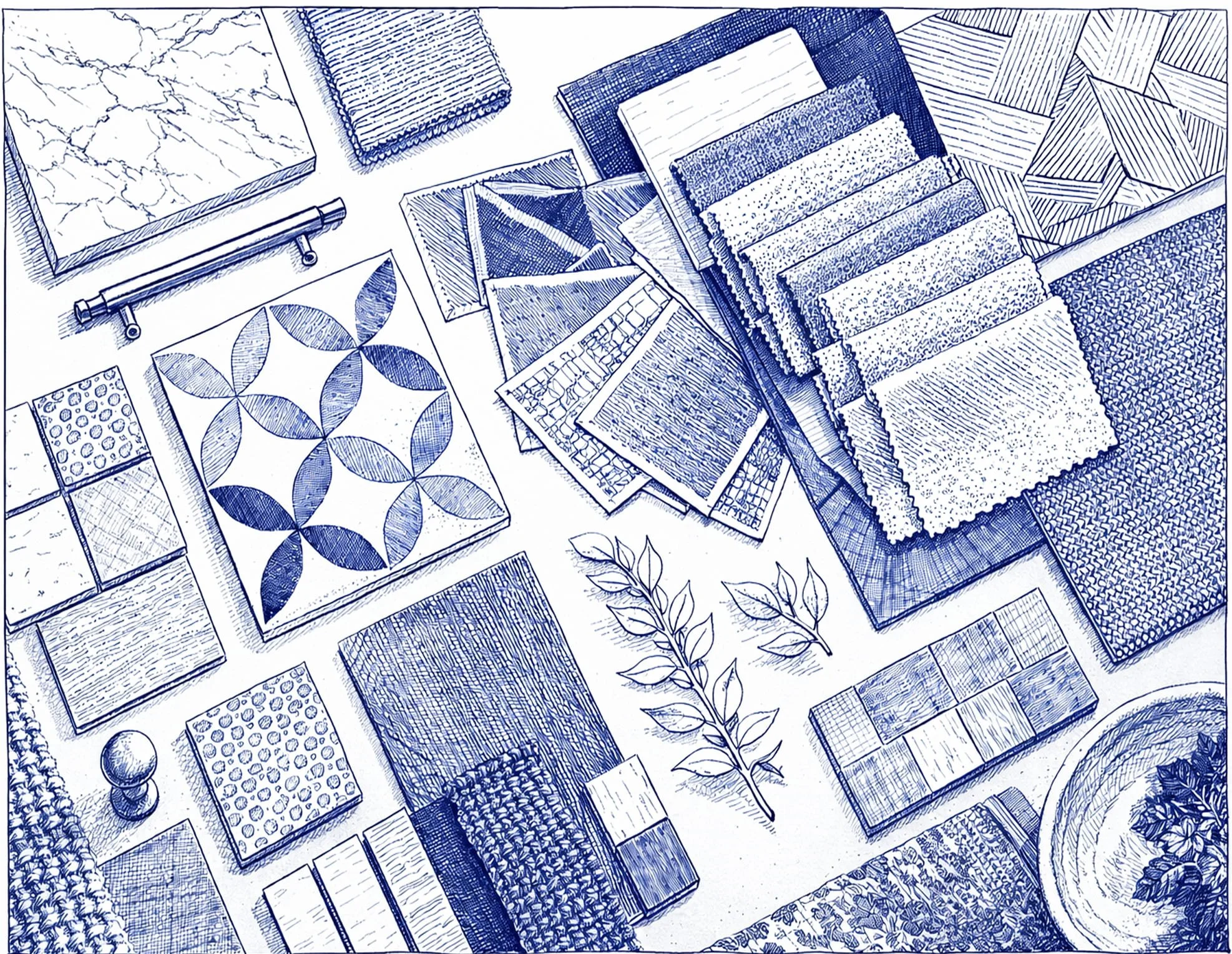
Built for the space between projectsThe expansion is a gift. The tracking has become a chore.
Materials
Architecture
Exhibitions
Trade fairs
Makers
Workshops
Culture
Design
Hospitality
Fashion
Materials Architecture Exhibitions Trade fairs Makers Workshops Culture Design Hospitality Fashion
Tomorrow morning, a new client is coming into the studio. A different house. A different family. A blank board waiting on your desk.
— THE END OF AN INSTALL DAYAnd for the first time all day, you stop.
The installers are still carrying boxes through the front door. Someone is steaming the drapery. The electrician has one last question. You are standing in front of the bookshelf moving a stack of books half an inch to the left, trying to make the room finally settle.
Paris happened. Milan happened. New materials appeared. Old materials came back differently. Hotels opened. Workshops launched collections. Something you saved six months ago suddenly became exactly right for a project, except now you cannot remember where you saw it.
You start running through the usual questions. What have I seen lately that would surprise her? What source have I found that she has not already seen on Instagram? What material, maker, color, place or idea could make this project feel completely its own?
Your client work did not pause so you could absorb any of it.
— THE problem has changedThe designer no longer owns access. Everyone owns access.
Your client sees the new hotel. She follows the designer in Copenhagen. She saves the chair.
There is no shortage of things to look at. And you already know how to judge what belongs in your work.
Your reps send launches. Your inbox fills with market previews. Instagram serves you twenty new makers before breakfast.
The harder part is having enough time to keep the field wide.
To notice the material appearing in three unrelated places.
To remember the maker you saw six months ago when the right project finally lands.
To connect something happening in hospitality with a residential project sitting on your board.
To keep your own reference world broad enough that the reliable source does not quietly become the automatic source.
Studio Intelligence Co. is not here to tell you what to like. It gives your eye more to work with.
I do the watching, traveling, reading, cross-referencing and remembering so that when something becomes relevant to your work, it is already within reach.
— WHAT STUDIO INTELLIGENCE DOES —Not more stuff. Better signals.
Studio Intelligence Co. operates as an external design intelligence desk for boutique interior design studios. I watch across design, hospitality, fashion, materials, architecture, exhibitions, trade fairs, makers, workshops and the wider culture around design.
The work is not simply collecting what is new. I am looking for repetition. Convergence. Timing. The small details that suggest something larger may be changing.
I ask
Why is this appearing now?
I ask
Where else is it showing up?
I ask
Is it emerging, established or already overexposed?
I ask
Does it have lasting design value?
I ask
The most useful answer is: skip it.
— What a private brief includesDesigned to read quickly. Built to remain useful.
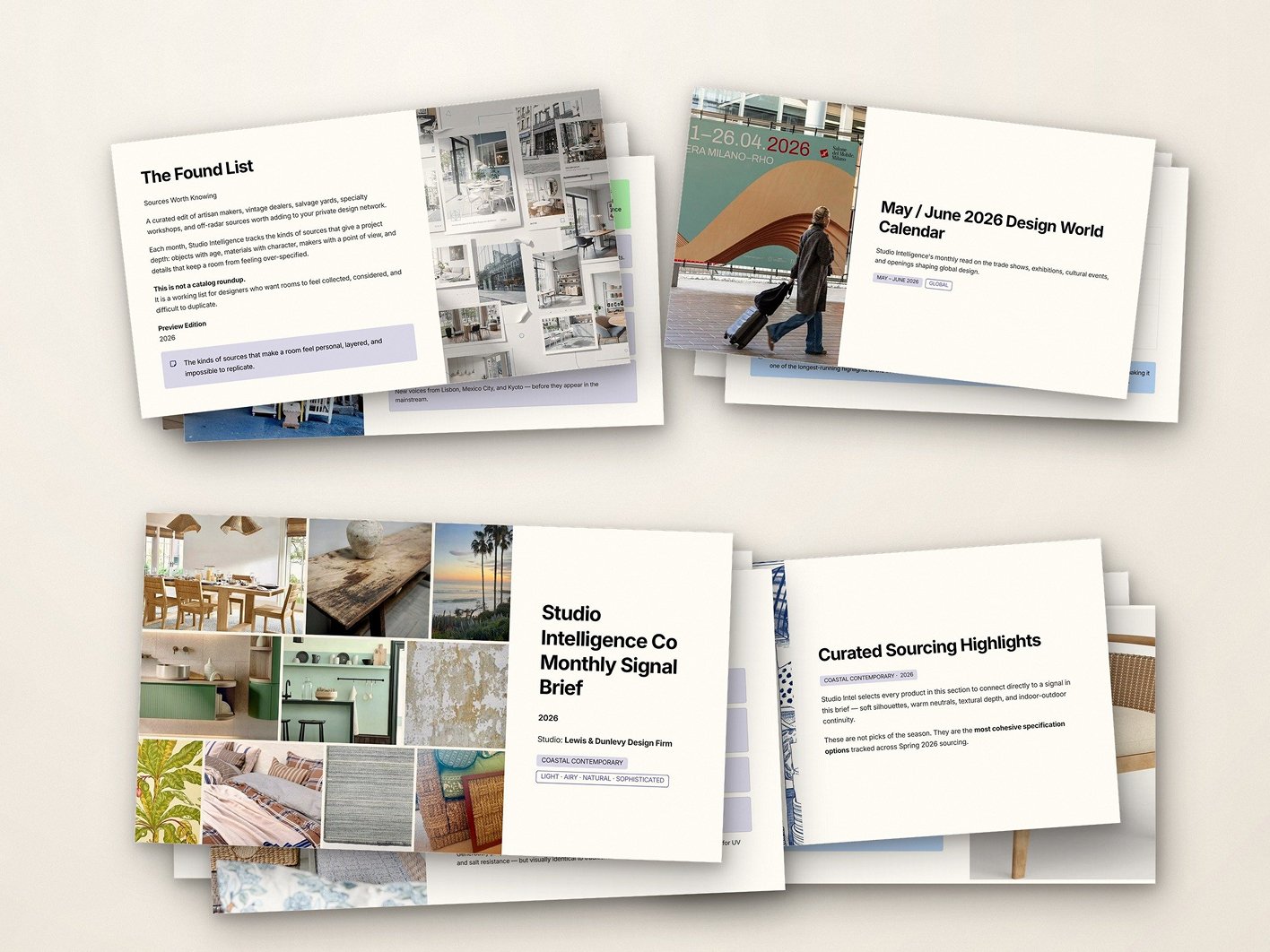
Each private Studio Intelligence brief is built around your studio, your aesthetic and the projects currently on your board. It is concise enough to review without adding another research assignment to your week. But it is not disposable.
01
Signal Sort
A focused read on what I am seeing as:
Emerging — ideas, materials and movements beginning to gain relevance.
Holding — directions with enough strength and longevity to continue specifying confidently.
Cooling — things I would begin watching more carefully, reconsidering or steering away from before they become the automatic choice.
02
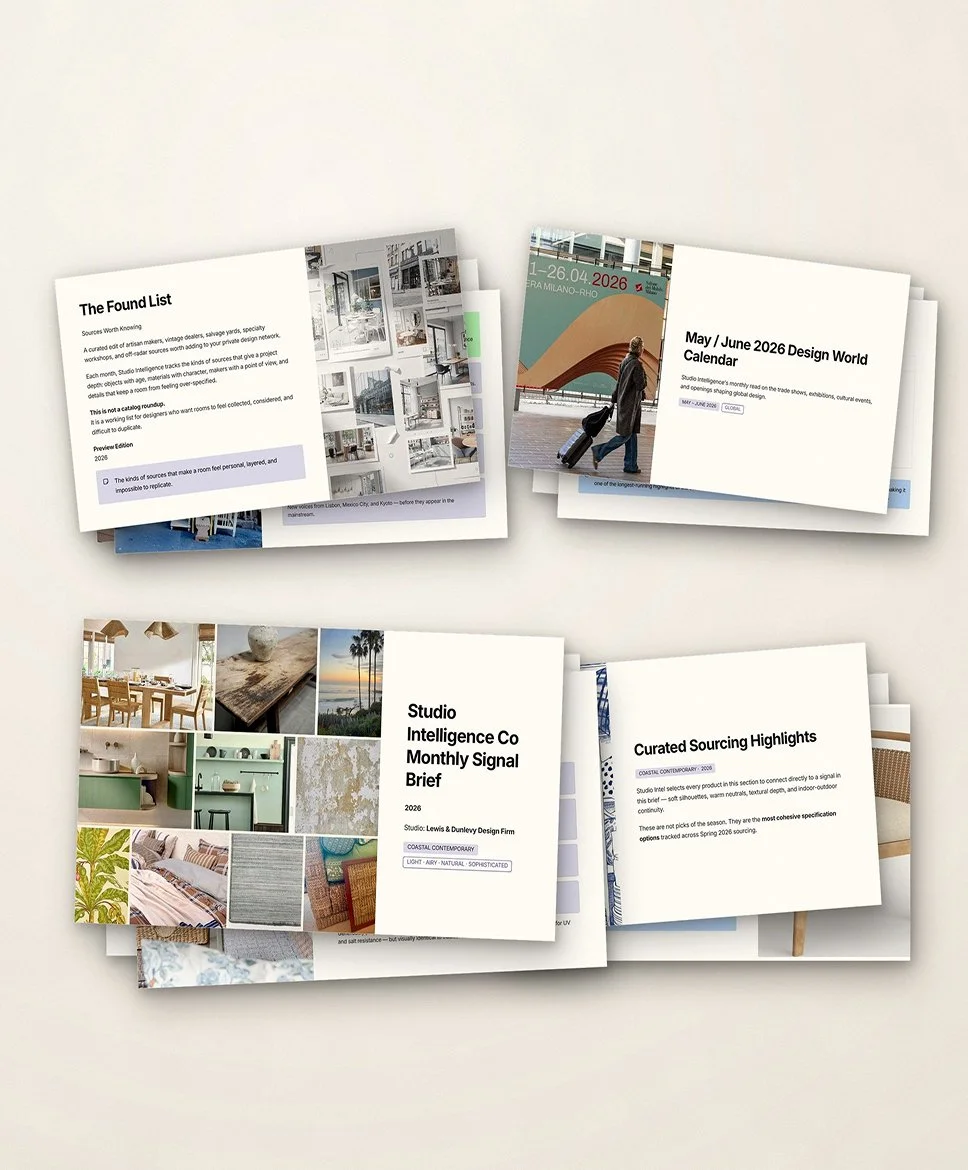
The Found List
A short list of makers, workshops, dealers, materials and sources worth adding to your reference world.
Not a vendor directory. Each entry includes why I think it deserves your attention and where it may become useful.
03
Project Notes
Observations connected directly to the work currently on your board.
A source that may solve something. A material worth investigating. A direction worth pushing. A specification that may be becoming too familiar. An idea that could move one project somewhere less expected.
04
Timing
What deserves attention now. What has room to develop. What may be worth saving for a later project.
Markets, exhibitions, launches, ordering windows and opportunities worth knowing before the moment has passed.
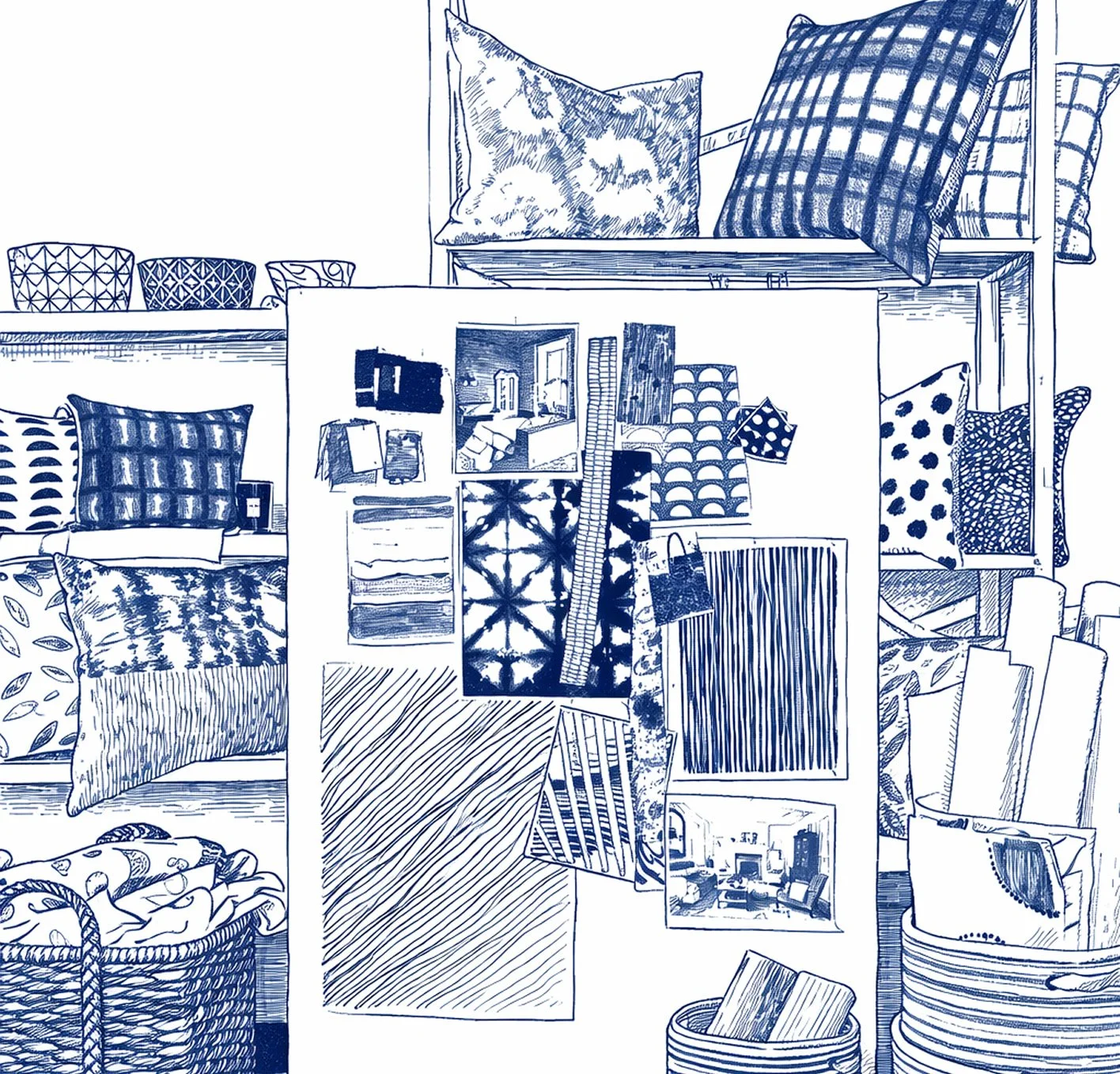
— You know you saw it somewhereA brief today. A reference library over time.
An extraordinary ceramicist appears in your Instagram feed. You save the post. A new hotel opening catches your eye. You make a mental note. Someone mentions a small workshop in Portugal. Six months later, the perfect project appears. And you cannot remember where you saw it.
That is why Studio Intelligence briefs are designed to be kept. Read the current brief quickly. Use what is relevant now. Then add it to your studio's growing reference library.
A maker you meet in February may solve a problem in October. A material you were not ready to specify this year may become exactly right next year. A hotel opening may give you the idea for an entry sequence two projects from now.
You do not have to remember where you saw it. You just have to remember that it is there.
— The brief should earn its keep more than onceWhat are you seeing lately?
While you are designing, the studio is also quietly marketing. There is the client presentation next Thursday. The newsletter you meant to send. The prospective client quietly watching your work online. And the inevitable question.
Studio Intelligence gives you something interesting to say.
A material signal can become a client conversation.
A maker can become a sourcing story.
A shift you are seeing can become a thoughtful Instagram or LinkedIn post.
A Cooling call can give you the language for steering a client away from something she has already seen everywhere.
This is not a social media content calendar. It is the thinking underneath good content.
— Why this is differentKnowing something exists is easy now. Knowing what to do with it is harder.
Most trend coverage tells you what is popular. Studio Intelligence asks different questions: Why now? How long might it last? What is driving it? Where is it appearing outside interiors? Is it becoming more interesting or simply more visible? What might a designer actually do with it? What is worth remembering? And what is worth ignoring altogether?
The expertise is no longer about access. It is about synthesis.
I did not build Studio Intelligence because designers need someone else deciding what is beautiful. They do not. I built it because there is now more worth watching than any working studio can reasonably keep up with while also serving clients well.
THE JOB SITS IN AN AWKWARD GAP
Too specialized to hand entirely to a junior person.
Too part-time to justify another senior hire.
Too varied for any one member of a small studio to own.
Studio Intelligence sits outside the project team and keeps looking. A second set of experienced eyes without another person on payroll.
And because I no longer take design commissions, I am not trying to win your client or design the room. My job is to widen the field around the work you are already doing.
— Public intelligence vs. private studio intelligencePublic
Studio Intelligence also publishes broader observations about what is happening across design, sourcing, travel, hospitality and materials. Those pieces are intentionally wide.
Private
Same method. One studio. Your aesthetic. Your market. Your sourcing level. Your current projects. Your point of view.
What is generally interesting becomes useful when it is applied to something real. That is the private service.
— So we pass notesYou cannot be in every room. Neither can I.
But I can go where I can go, stand there, pay attention and pass along the things I think are worth knowing. Designers have always done this for one another.
The workshop worth visiting.
The material worth asking about.
The strange little source no one seems to know.
The exhibition worth rearranging a day to see.
The thing that looked wonderful in photographs and was not worth the trip.
The small detail inside one room that changes how you think about another room entirely.
So we pass notes. Studio Intelligence Co. is my version of that exchange, built for a working studio that no longer has enough hours to see everything for itself.
Your next project is already comingYou do not have to see everything yourself.
There will always be another project. Another market. Another launch. Another source you meant to go back and find. I do the looking while you are doing the designing.